


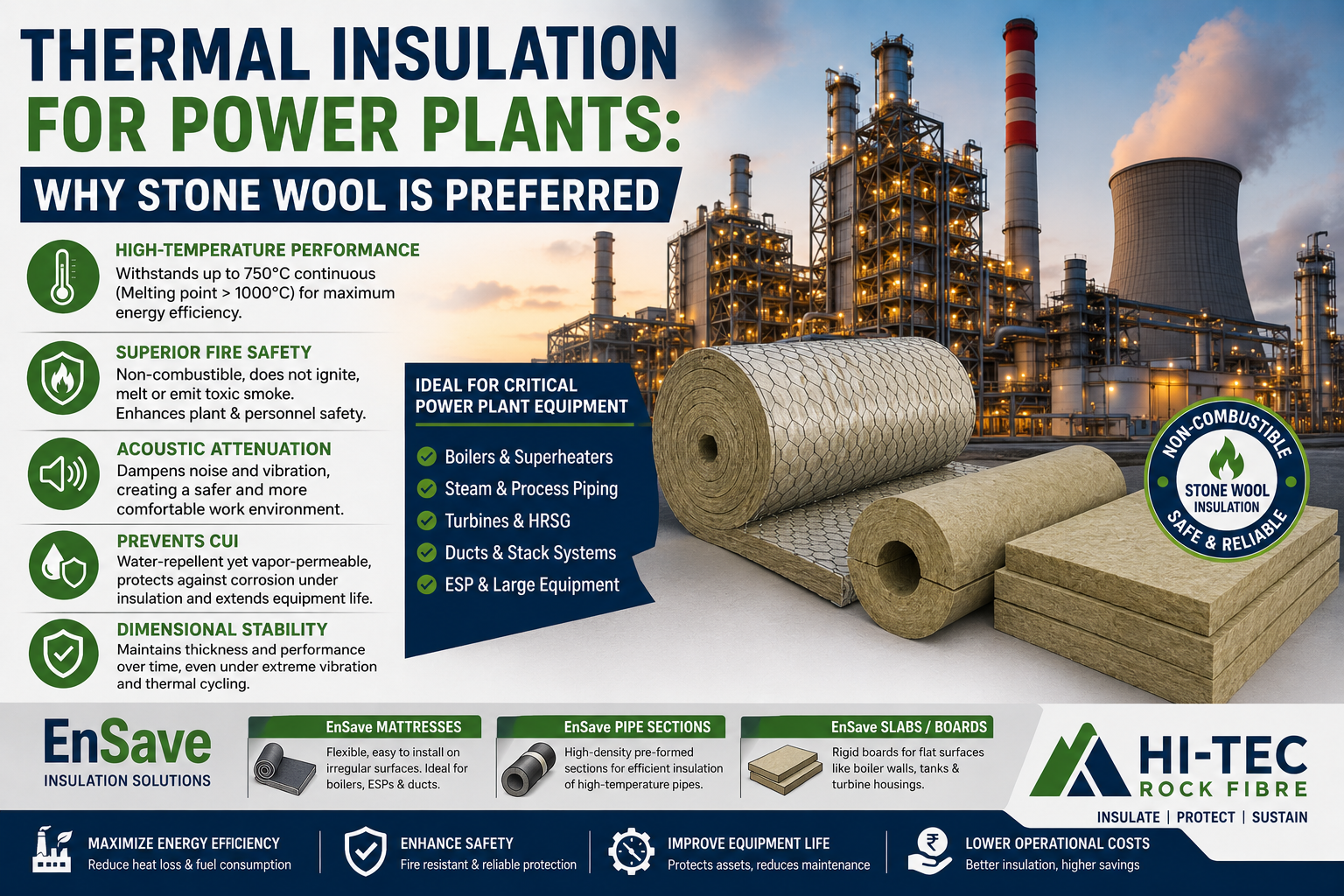
10 Jun Thermal Insulation for Power Plants: Why Stone Wool Is Preferred
Power generation is an industry defined by extremes. Whether operating a coal-fired plant, a combined-cycle gas turbine facility, or a biomass plant, the core objective remains the same: convert thermal energy into electrical power as efficiently and safely as possible. In these high-stakes environments, even a marginal drop in thermal efficiency can lead to massive fuel wastage and increased operational costs.
This is where advanced thermal insulation solutions become critical. Among the various materials engineered for industrial applications, stone wool has consistently proven to be the preferred choice for power plant insulation.
Let’s explore the unique demands of power generation facilities and why stone wool stands out as the ultimate protective barrier for boilers, turbines, and high-pressure steam networks.
The Extreme Demands of Power Generation
Power plants consist of complex networks of high-temperature equipment. Key components such as boilers, precipitators, exhaust ducts, and steam turbines routinely operate at temperatures ranging from 300°C to well over 600°C.
Insulating this equipment is not just about keeping the heat inside; it requires a material that can withstand constant thermal cycling, intense mechanical vibration, and the perpetual risk of fire, all while protecting the personnel working in close proximity. Standard insulation materials often degrade, shrink, or lose their thermal resistance under these harsh conditions. Stone wool, however, is built specifically for this level of endurance.
Why Stone Wool is the Standard for Power Plant Insulation
Manufactured by spinning molten basalt rock and steel slag into dense, interwoven fibers, stone wool is inherently equipped to handle the rigors of heavy industry. Here is why it is the industry standard:
1. Uncompromising High-Temperature Performance
The primary function of power plant insulation is to minimize heat loss and maximize energy retention. Stone wool boasts exceptional thermal stability, maintaining its structural integrity and insulating properties at continuous operating temperatures up to 750°C (and withstanding spikes even higher). By keeping the heat securely within the process lines and boilers, stone wool significantly boosts the overall thermodynamic efficiency of the plant.
2. Superior Fire Safety
In facilities dealing with high-pressure steam, combustible fuels, and extreme heat, fire safety is the top priority. Stone wool is entirely non-combustible. It does not ignite, melt, or produce toxic smoke when exposed to open flames. With a melting point exceeding 1000°C, it acts as a formidable fire barrier, providing crucial extra minutes for plant personnel to safely shut down systems or evacuate during an emergency.
3. Acoustic Attenuation
Power plants are incredibly noisy environments. The roar of gas turbines, the hiss of high-velocity steam lines, and the vibration of heavy machinery can create hazardous noise levels for workers. The dense, porous, and fibrous structure of stone wool makes it an excellent acoustic insulator. It traps sound waves and dampens mechanical vibrations, helping facilities comply with occupational noise regulations and creating a safer working environment.
4. Prevention of Corrosion Under Insulation (CUI)
Corrosion Under Insulation (CUI) is a notorious and expensive problem in industrial settings. When moisture penetrates insulation and reaches the hot metal surface of pipes or vessels, it accelerates severe corrosion. High-quality stone wool is engineered to be highly water-repellent (hydrophobic) while remaining vapor-permeable. This means it repels liquid water but allows any trapped moisture vapor to escape, keeping the underlying infrastructure dry and extending the lifespan of the plant’s equipment.
5. Dimensional Stability
Unlike some insulation materials that sag, settle, or compress over time due to the constant vibrations of power plant machinery, stone wool retains its thickness and density. This dimensional stability ensures that there are no “cold spots” or gaps in the insulation over the lifespan of the equipment, providing a consistent thermal barrier year after year.
Meeting the Challenge with EnSave Solutions
To achieve optimal results, power plants require tailored thermal insulation solutions that fit the specific geometries of their equipment. At Hi-Tec Rock Fibre, our EnSave line is designed specifically to meet these heavy-duty industrial needs.
- EnSave Light Resin Bonded (LRB) Mattresses: Backed with galvanized or stainless steel wire mesh, these flexible mattresses are ideal for wrapping large, irregular surfaces like boilers, electrostatic precipitators, and large-diameter ducts. They easily accommodate thermal expansion and heavy vibrations.
- EnSave Pipe Sections: Pre-formed, high-density cylindrical sections provide quick, precise, and secure insulation for extensive networks of high-temperature steam and process pipes.
- EnSave Slabs/Boards: Engineered for flat surfaces, these rigid boards provide excellent thermal and acoustic insulation for boiler walls, tanks, and turbine housings.
Conclusion
Efficiency in power generation is a game of margins, and high-performance power plant insulation is one of the most effective ways to protect those margins. By utilizing stone wool, plant operators can significantly reduce energy losses, enhance workplace safety, and ensure long-term operational reliability.
When you invest in engineered stone wool products, you are not just wrapping a pipe or a boiler; you are securing the core efficiency of your entire facility.
To learn more about how our EnSave thermal insulation solutions can optimize your power generation facility, visit Hi-Tec Rock Fibre and explore our comprehensive range of industrial products.
No Comments