


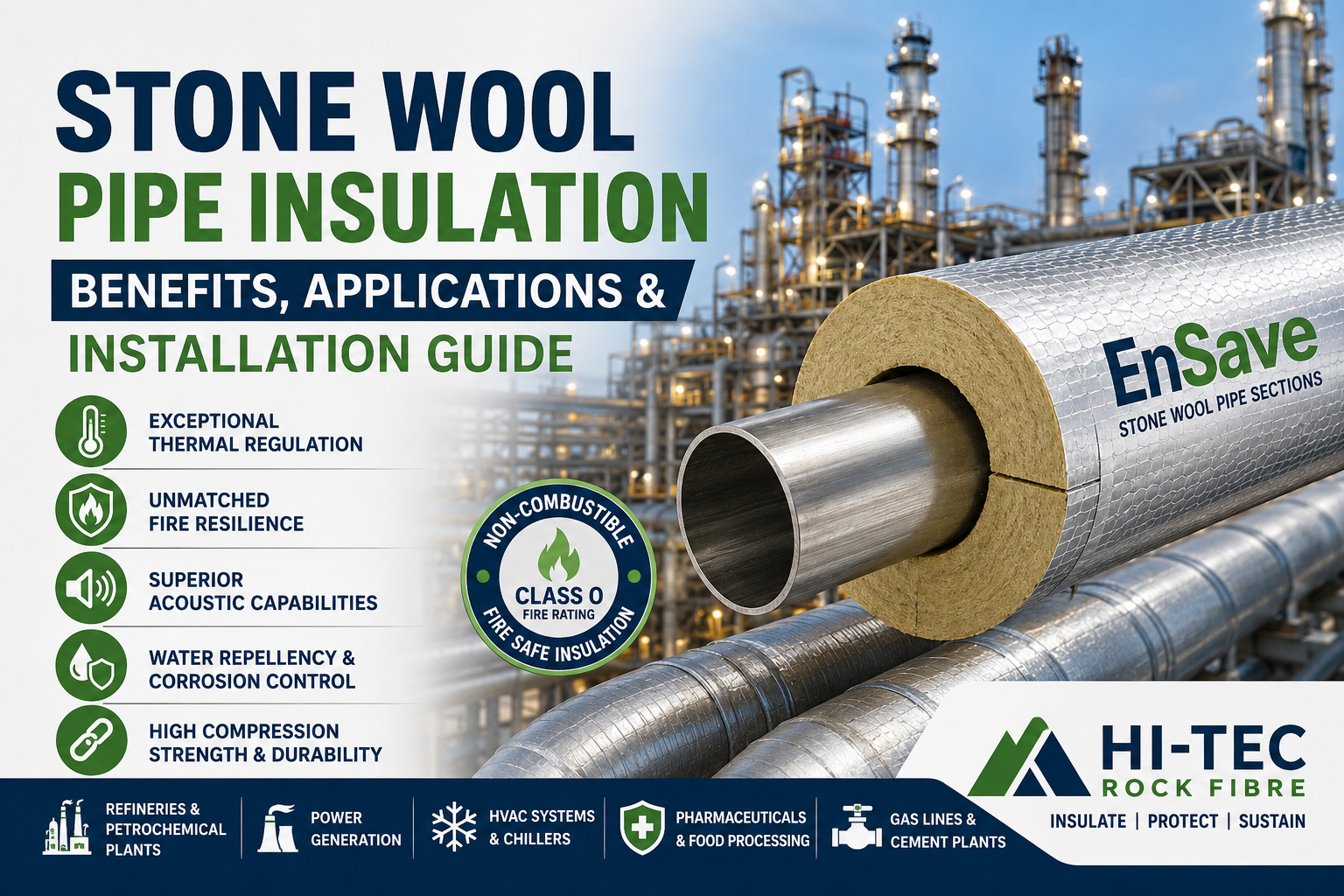
10 Jun Stone Wool Pipe Insulation: Benefits, Applications & Installation Guide
In the modern industrial landscape, maintaining optimal temperatures in process pipelines is not just about efficiency—it is a critical requirement for safety, operational stability, and energy conservation. Whether dealing with high-temperature steam lines or sub-zero refrigeration units, the right pipe insulation makes a substantial difference in an industry’s bottom line.
Among the various materials available, stone wool pipe insulation has emerged as the premier choice for demanding industrial and commercial environments. Renowned for its unparalleled thermal performance, structural integrity, and fire resistance, it is a staple in modern engineering.
In this comprehensive guide, we will explore the core benefits, key applications, and installation best practices for stone wool pipe insulation, specifically highlighting the high-performance capabilities of the EnSave Pre-formed Pipe Sections by Hi-Tec Rock Fibre.
What is Stone Wool Pipe Insulation?
Stone wool (also known as rock wool) is an insulation material manufactured from natural basalt rock and recycled minerals, melted at extreme temperatures and spun into fine, dense fibers. For pipework, these fibers are engineered into pre-formed, cylindrical, and split-hinged sections that easily snap over pipes.
At Hi-Tec Rock Fibre, our EnSave Stone Wool Pipe Sections are manufactured with a higher binder content, ensuring high compression resistance and a uniform density (typically 140 kg/m³ to 160 kg/m³). This guarantees precision fitting, minimal heat loss, and durable performance across a wide range of temperatures.
Key Benefits of Stone Wool Pipe Insulation
Choosing the right pipe insulation goes beyond just wrapping a pipe. EnSave stone wool sections offer a multi-functional barrier that protects your infrastructure and personnel:
- Exceptional Thermal Regulation
Stone wool provides top-tier thermal resistance, drastically reducing heat loss or gain. With a service temperature range of -50°C to 750°C, EnSave pipe sections maintain process stability in extreme environments, directly translating to lowered energy consumption and reduced operational costs.
- Unmatched Fire Resilience
Industrial safety is non-negotiable. Stone wool is inherently non-combustible and can withstand temperatures above 1000°C without emitting harmful smoke or toxic fumes. EnSave pipe insulation boasts a Class O fire rating and complies with stringent safety standards, acting as a vital firestop in complex pipe networks.
- Superior Acoustic Capabilities
Fluids and gases traveling at high velocities through industrial pipes can generate significant, disruptive noise. The dense, fibrous structure of stone wool effectively absorbs sound waves, mitigating noise transmission and creating a safer, more comfortable acoustic environment for plant personnel.
- Water Repellency & Corrosion Control
Moisture ingress is the enemy of metal pipes, often leading to Corrosion Under Insulation (CUI). EnSave stone wool pipe insulation is engineered with water-repellent properties. It resists moisture absorption while remaining highly breathable, allowing any trapped vapor to escape and protecting the underlying pipes from rust and degradation.
- High Compression Strength & Durability
Thanks to their concentric formation and excellent compression resistance, these pre-formed sections do not sag or lose their thickness over time. They offer a complete 360-degree thermal barrier that lasts for the lifetime of the pipework.
Core Applications in Industry
Because of its robust profile, stone wool pipe insulation is highly versatile. It is the go-to solution for both hot and cold insulation across a multitude of sectors, including:
- Refineries & Petrochemical Plants: Insulating high-temperature process lines and distillation units.
- Power Generation: Ensuring thermal efficiency in steam lines and boiler pipework.
- HVAC Systems & Chillers: Preventing condensation and energy loss in commercial and industrial air conditioning ducting and chilled water lines.
- Pharmaceuticals & Food Processing (Edible Oil): Maintaining strict temperature controls required for sensitive manufacturing processes.
- Gas Lines & Cement Plants: Providing durable thermal protection and personnel safety against extreme contact temperatures.
Installation Guide for Stone Wool Pipe Insulation
One of the greatest advantages of EnSave pre-formed sections is their ease of application. Designed as split-hinged cylinders, they allow for a quick, “snap-on” installation. Here is a brief guide to achieving a perfect fit:
Step 1: Surface Preparation
Ensure the pipe surface is entirely clean, dry, and free of dirt, grease, or existing rust. Applying insulation over a damp pipe can accelerate corrosion.
Step 2: Sizing the Insulation
Select the correct nominal bore (ranging from ½ inch to 16 inches) and thickness (25mm to 100mm) according to your specific thermal requirements. EnSave sections are precisely manufactured to fit standard pipe diameters without the need for additional spacers.
Step 3: Snapping on the Sections
Open the split hinge of the cylindrical section and snap it directly over the pipe. Ensure that the longitudinal joints are pressed tightly together to prevent any thermal bridging.
Step 4: Staggering Joints (For Multiple Layers)
If the operating temperatures require a double-layer insulation system, ensure that the joints of the second layer are staggered relative to the first layer. This prevents direct pathways for heat escape.
Step 5: Securing the Insulation
Secure the sections in place using aluminum tape (if using FSK-faced sections), stainless steel wire, or banding straps at regular intervals. Ensure the binding is tight enough to hold the insulation firmly, but not so tight that it crushes the stone wool and reduces its thermal resistance.
Step 6: Weatherproofing (Outdoor Applications)
If the pipes are located outdoors, the insulation must be covered with an appropriate metal cladding (such as aluminum or stainless steel jacketing) to protect the stone wool from heavy rainfall, UV radiation, and mechanical damage.
Conclusion
Investing in high-quality pipe insulation is a strategic decision that pays immediate dividends in energy savings, operational efficiency, and safety. Stone wool pipe insulation stands out as the ultimate multi-tasker—managing extreme temperatures, dampening industrial noise, and acting as a formidable fire barrier.
At Hi-Tec Rock Fibre, our EnSave Stone Wool Pipe Sections are engineered to meet strict domestic and international standards (IS, ASTM, and BS). With a commitment to quality and sustainability, we provide insulation solutions designed to protect your assets and the environment.
Ready to optimize your industrial pipework? Explore our full range of EnSave stone wool insulation products at Hi-Tec Rock Fibre today, or contact our technical team for custom thickness calculations for your next project.
No Comments