


14 Apr Harnessing Thermal Power: How Stonewool Insulation Drives Energy Efficiency in Heavy Industry
In the competitive arena of modern industrial manufacturing, energy is often the highest overhead cost. From the massive kilns of a cement plant to the high-pressure steam lines of a power station, every thermal unit generated represents a direct expense in fuel, electricity, and carbon credits. When heat escapes into the atmosphere, it isn’t just a technical inefficiency—it is a financial drain.
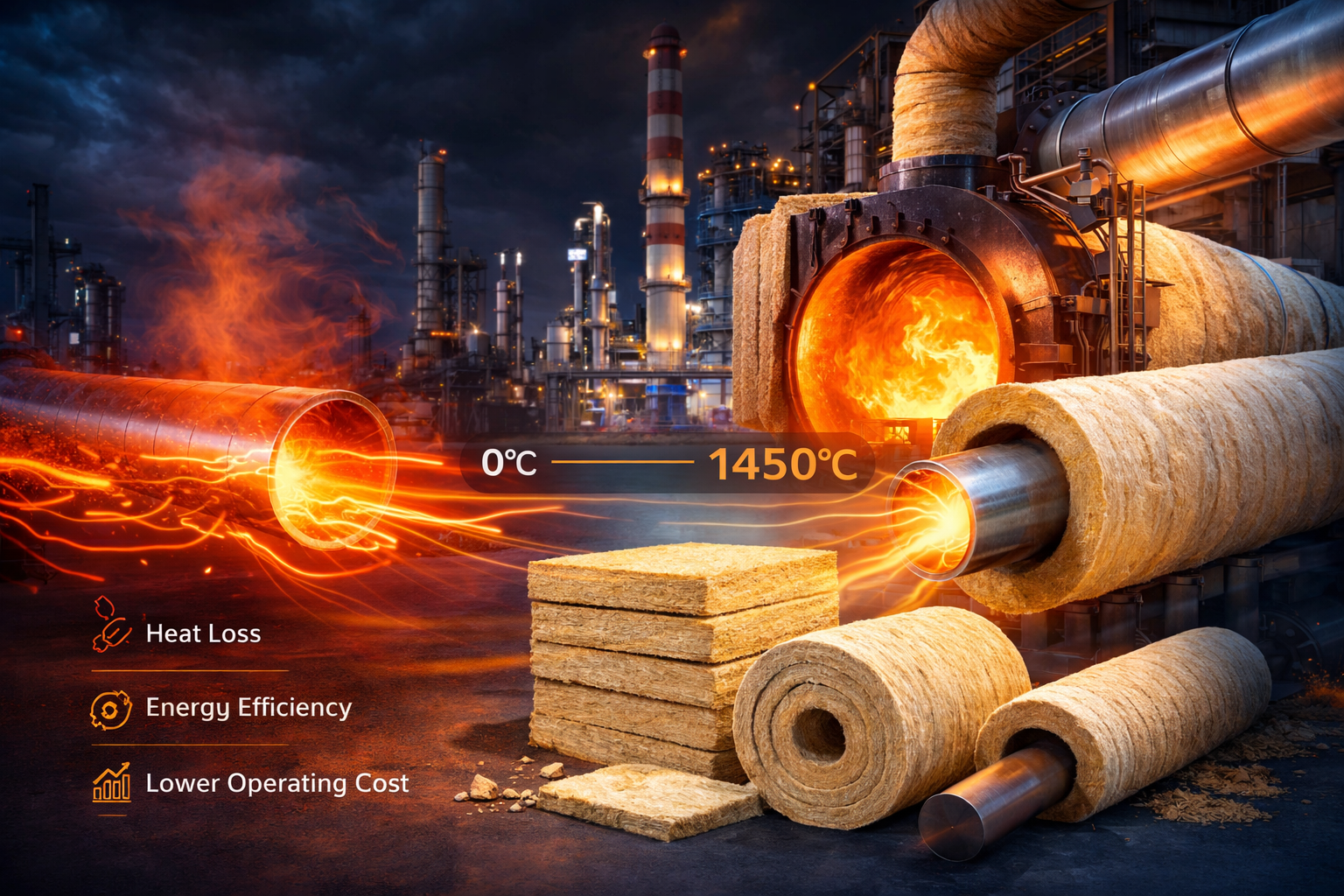
Stonewool insulation has emerged as the premier solution for industries seeking to master their energy consumption. At Hi-Tec Rock Fibre, we provide a comprehensive range of thermal insulation stonewool products engineered to maintain peak efficiency across the entire thermal spectrum—from 0°C to 1450°C.
The Industrial Heat Loss Crisis
Before we can improve energy efficiency, we have to look at what failing to insulate actually costs. In a poorly insulated facility, heat constantly escapes into the surrounding air.
For many industrial plants, this “invisible leak” is massive. An exposed valve or a sagging insulation blanket can easily reach surface temperatures of 300°C or higher. Simply put, the rate at which you lose all that heat comes down to a few basic factors:
- The materials your equipment is made of
- How much surface area is exposed
- The temperature difference between the inside and outside
- The thickness of your protective barrier
Without a strong, heat-blocking layer—like industrial stonewool insulation—energy just bleeds away. To make up for this lost heat and keep your processes running at the required temperatures, you have to burn a lot more fuel. The bottom line is a direct, unnecessary spike in your day-to-day operating costs.
How Stonewool Insulation Maximizes Energy Efficiency
Stonewool insulation energy efficiency is not a marketing buzzword; it is a result of advanced material science. By melting basaltic rock and spinning it into high-density fibres, we create a material that excels at “trapping” energy.
1. Minimal Thermal Conductivity
The primary “feature” of stonewool is its extremely low thermal conductivity. Even at temperatures exceeding 600∘C, stonewool maintains a stable structure that resists the movement of heat. This allows facilities to achieve a “steady state” where the energy input matches the process requirements with minimal waste.
2. High Thermal Mass and Density
Unlike lightweight foam or fiberglass, thermal insulation stonewool has a high density. This thermal mass helps to dampen temperature fluctuations within a system. In industries like glass or steel manufacturing, where maintaining a precise temperature is critical for product quality, stonewool acts as a thermal “buffer,” reducing the strain on the heating elements.
3. Prevention of “Thermal Bridging”
In industrial settings, metal supports and fasteners often act as “highways” for heat to escape—a process known as thermal bridging. Hi-Tec Rock Fibre’s specialized stonewool sheets are designed to be installed with tight, overlapping joints that eliminate these gaps, ensuring a continuous thermal seal from 0°C to 1450°C.
Temperature Control: 0°C – 1450°C
The versatility of the Hi-Tec Rock Fibre inventory is our greatest asset to your facility. We understand that a single plant may have a variety of thermal needs:
| Temperature Range | Typical Application | Recommended Solution |
| 0°C – 200°C | Chilled water lines, HVAC, and low-pressure steam. | Low-density Stonewool blankets. |
| 200°C – 750°C | Boilers, exhaust ducts, and petrochemical reactors. | High-density Stonewool boards. |
| 750°C – 1450°C | Forges, melting furnaces, and refractory backups. | Ceramic Fibre & Specialized Rockfibre sheets. |
By utilizing our “hook point”—the ability to source all types of stonewool and ceramic fibre from a single provider—engineers can design a tiered insulation strategy that optimizes energy savings at every stage of the production line.
The Economic Benefits of Superior Insulation
When you invest in industrial heat insulation stonewool, you are investing in the long-term health of your balance sheet.
1. Massive Fuel and Electricity Savings
The most immediate benefit is a reduction in energy bills. By preventing heat from radiating away from furnaces and pipes, the primary heating systems (burners, elements, or boilers) do not have to work as hard. Many of our clients report a reduction in fuel consumption by as much as 15% to 25% following a full insulation audit and upgrade.
2. Drastically Lower Operating Costs
Efficiency leads to lower overheads. Beyond the fuel itself, efficient systems require less maintenance. When a boiler operates at a steady, insulated temperature, it experiences fewer “hot spots” and localized stresses, reducing the frequency of emergency shutdowns and costly repairs.
3. Improved Equipment Life
High temperatures cause metals to expand and contract—a cycle known as thermal fatigue. Over time, this causes cracks, warping, and structural failure. Stonewool insulation helps maintain a uniform temperature across the surface of the equipment, significantly slowing the rate of thermal degradation. By protecting your assets, you extend their operational lifespan by years, if not decades.
Why Hi-Tec Rock Fibre is the Choice for Global Industrial Plants
Hi-Tec Rock Fibre has become a trusted name in stonewool insulation India and beyond because we focus on the intersection of quality and performance. Our products are not just “covers”; they are engineered thermal barriers.
- Custom Density & Thickness: We provide stonewool in various densities to match the specific convective heat loss profiles of your machinery.
- Sustainability: Stonewool is a natural, recyclable product. By using our solutions, industries not only save money but also contribute to a circular economy and lower their overall carbon footprint.
Case Study Focus: The Steel Industry
In the steel sector, where furnaces operate in the 1000°C to 1450°C range, the “backing” insulation is as important as the primary refractory brick. By using Hi-Tec’s high-grade ceramic and stonewool sheets as a secondary layer, steel mills can reduce the exterior casing temperature of their ladles and furnaces, allowing for safer working conditions and significantly higher heat retention during the smelting process.
Conclusion: Turning Efficiency into Profit
In the range of 0°C to 1450°C, every degree saved is a rupee earned. Stonewool insulation energy efficiency is the most effective tool in the arsenal of a modern plant manager. It addresses the triple bottom line: reducing costs, protecting equipment, and ensuring environmental compliance.
At Hi-Tec Rock Fibre, we are dedicated to helping you master your thermal environment. From the smallest steam pipe to the largest industrial furnace, our sheets and blankets provide the peak performance required by today’s high-temperature industries.
Are you ready to optimize your plant’s energy consumption?
Discover our full range of thermal solutions at Hi-Tec Rock Fibre.
See the Difference:
Follow us on Instagram and Linkedin for technical insights, product demonstrations, and a look at our latest industrial installations across India.
No Comments