

29 Mar Ceramic Fibre Temperature Capacity (0°C – 1450°C): The Ultimate Guide to Advanced Thermal Insulation
In the modern industrial landscape, heat is both a tool and a challenge. From the searing interiors of an industrial forge to the precise thermal requirements of a laboratory kiln, managing temperatures effectively is the difference between operational success and catastrophic failure. As energy costs rise and safety regulations tighten, the demand for high-performance insulation has never been higher.
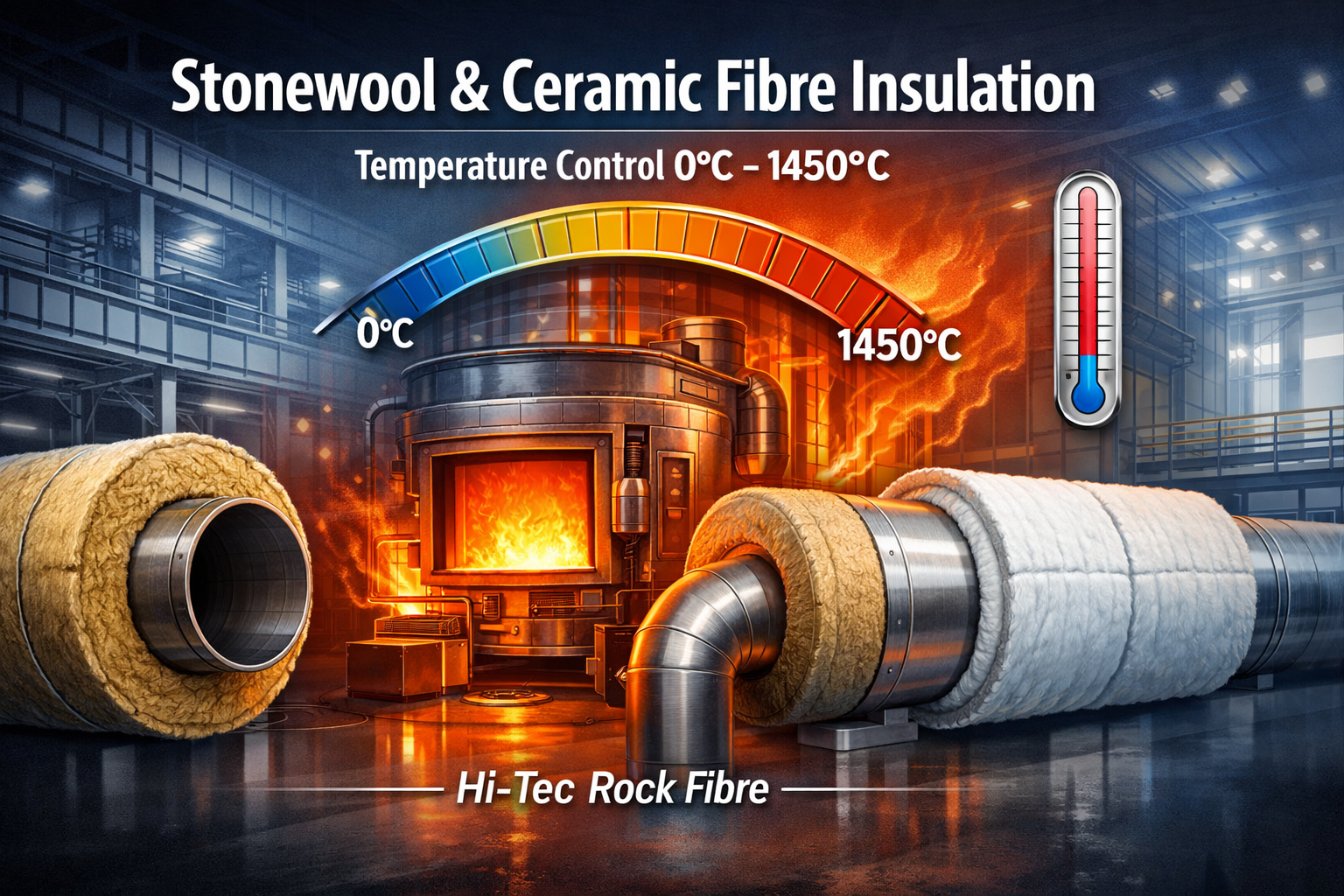
At the forefront of this thermal revolution are two critical materials: Ceramic Fibre and Stonewool. While many suppliers offer basic solutions, Hitec Rockfibre stands out by providing a comprehensive inventory of Stonewool and ceramic fibre sheets designed to handle the entire spectrum of thermal demands—from 0°C to 1450°C.
Understanding the Foundation: What is Ceramic Fibre?
Ceramic fibre, often referred to as Refractory Ceramic Fibre (RCF), is an engineered material designed specifically for high-heat environments where traditional insulation would melt or degrade. These fibres are primarily composed of alumina-silicate materials.
The manufacturing process involves melting high-purity alumina and silica in an electric arc furnace. The molten stream is then “spun” or “blown” using high-pressure air into a fine, white, wool-like mass. This structure is what gives ceramic fibre its incredible thermal properties. Because the fibres are intertwined, they create millions of tiny air pockets that resist the flow of heat.
The 1450°C Threshold: Pushing the Limits
Not all ceramic fibres are created equal. Standard grades are typically rated for continuous use up to 1260°C. However, for extreme applications, specialized grades are required. By adding Zirconia (ZrO2) or increasing the Alumina (Al2O3) content, ceramic fibre sheets can safely operate in environments reaching 1450°C.
These high-grade sheets are indispensable in industries such as:
- Aerospace: For heat shields and engine components.
- Glass Manufacturing: Where furnaces must maintain consistent, extreme heat for weeks at a time.
Iron and Steel Forging: Protecting the structural integrity of the facility from molten metal splashes and radiant heat.
The Power of Stonewool: The Versatile Workhorse
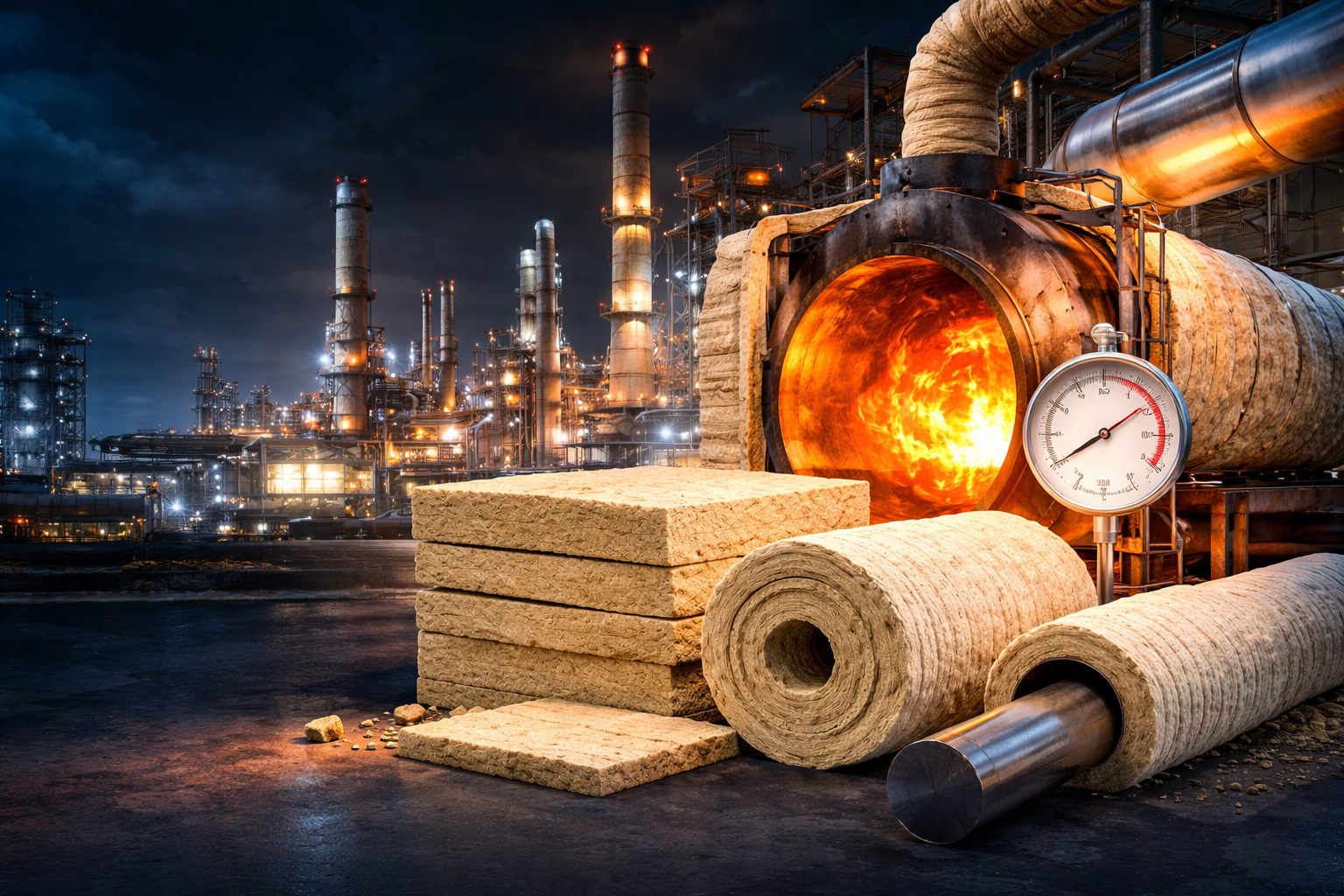
While ceramic fibre dominates the extreme high-end of the temperature scale, Stonewool (also known as Rockwool or Mineral Wool) is the essential foundation for medium-to-high temperature applications.
Stonewool is produced by melting volcanic rock (basalt) at temperatures exceeding 1500°C. The molten rock is then spun into fibres and coated with a binder to create sheets, batts, or rolls.
Why Stonewool is Essential for Your Facility
Stonewool is unique because it offers a “triple-layer” of protection:
- Thermal Resistance: It maintains its R-value (insulating power) even in fluctuating temperatures.
- Fire Safety: Because it is made of rock, it is naturally non-combustible. It does not produce toxic smoke or flame spread, often acting as a fire-stop in commercial buildings.
- Acoustic Performance: The dense, fibrous structure of Stonewool is one of the best materials for sound absorption, making it a favorite for mechanical rooms and loud industrial plants.
At Hitec Rockfibre, the Stonewool range is engineered to complement ceramic solutions, ensuring that if your project requires stability at 400°C or 700°C, you aren’t overspending on ultra-high-temp materials when a robust stone-based solution is more efficient.
Temperature Mapping: 0°C to 1450°C
To understand why Hitec Rockfibre provides such a critical service, we must look at the “Thermal Spectrum.” Different materials perform better at different stages.
1. The Low to Medium Range (0°C – 250°C)
In this range, insulation is often about preventing condensation and maintaining process temperatures in pipes and HVAC systems. Stonewool is frequently used here for its moisture resistance and durability.
2. The High-Performance Range (250°C – 850°C)
This is the “sweet spot” for industrial Stonewool. It is used for boiler walls, large-diameter pipe insulation, and fire-rated partitions. It provides excellent structural rigidity and prevents “hot spots” on the exterior of machinery.
3. The Refractory Range (850°C – 1260°C)
Here, we transition into Ceramic Fibre. Standard ceramic blankets and sheets are used for kiln linings and furnace back-up insulation. The low heat storage of ceramic fibre means that furnaces can heat up and cool down much faster than those lined with heavy firebricks.
4. The Extreme Range (1260°C – 1450°C)
This is where the engineering expertise of Hitec Rockfibre truly shines. These temperatures require Zirconia-grade ceramic fibre sheets. These materials resist “shrinkage”—a common problem where lower-grade fibres pull apart at high heat, leaving gaps in the insulation.
Technical Advantages of Ceramic Fibre Sheets
Choosing ceramic fibre over traditional refractory bricks offers several mathematical and operational advantages:
- Low Thermal Conductivity: The value of λ (thermal conductivity) is significantly lower in ceramic fibres compared to solid bricks. This means you can achieve the same insulation value with a much thinner wall.
- Thermal Shock Resistance: If you take a hot refractory brick and drop it into cold air, it may crack (spalling). Ceramic fibre, due to its flexible fibrous nature, can handle rapid temperature swings without any structural damage.
- Weight Reduction: Ceramic fibre linings are nearly 75% lighter than brick linings. This reduces the structural steel requirements for furnaces and kilns, lowering overall construction costs.
Why Choose Hitec Rockfibre?
The “hook point” for any procurement manager or engineer is simple: Hitec Rockfibre have all types of stonewool and ceramic fibre sheets from 0 to 1450°C Temperature. Having a single source for both Stonewool and Ceramic Fibre is a massive logistical advantage. But beyond the inventory, Hitec Rockfibre brings technical expertise to the table. When you browse their Instagram and Linkedin or visit their Website, you aren’t just looking at products; you are looking at solutions for:
- Custom Gaskets: Cutting ceramic fibre sheets into precise shapes for high-temp seals.
- Industrial Blankets: Large-scale insulation for oil and gas refineries.
- Safety Upgrades: Transitioning old, inefficient systems to modern, energy-saving stone and ceramic modules.
Installation and Safety: Best Practices
Working with high-temperature fibres requires professional handling. Because these materials are fibrous, they can create dust during installation.
- PPE: Always wear gloves, goggles, and a high-quality (N95 or better) mask when cutting Stonewool or ceramic fibre sheets.
- Sealing: In high-velocity air environments (like ducts), ceramic fibres should be treated with a “rigidizer” to prevent individual fibres from being blown away.
- Storage: Keep these materials dry. While Stonewool is water-resistant, wet insulation loses its thermal effectiveness until it is completely dried out.
Conclusion: Investing in Thermal Excellence
In the range of 0°C to 1450°C, there is no room for error. A failure in insulation can lead to warped machinery, increased carbon footprints, and safety hazards for personnel. By utilizing the advanced Stonewool and Ceramic Fibre solutions from Hitec Rockfibre, industries can ensure they are operating at peak efficiency.
Whether you are looking for the fire-stopping power of volcanic rock or the extreme heat resistance of aluminosilicate ceramic, the right sheet is waiting for you.
Ready to upgrade your thermal management? Visit the official Hitec Rockfibre Website to view technical datasheets, or follow them on Instagram and linkedin for a behind-the-scenes look at their latest high-heat installations.
No Comments