

02 Jul A Deep Dive Into Ceramic Fibre: The Ultimate High-Temperature Insulation
When industrial processes push temperatures to the extreme—far beyond the limits of standard building materials—engineers and facility managers turn to ceramic fibre. But what exactly is this material, and why is it considered the backbone of heavy industries like metallurgy, petrochemicals, and power generation?
If you operate high-heat equipment, understanding the mechanics of your insulation is critical for energy efficiency and workplace safety. Here is a detailed look at what ceramic fibre is, how it is made, and why it outperforms traditional refractory materials.
What is Ceramic Fibre?
Ceramic fibre is an advanced, lightweight refractory (heat-resistant) material designed for applications where temperatures consistently exceed 1,000°C (1,832°F).
It is primarily composed of alumina (aluminum oxide) and silica (silicon dioxide). To create the fibre, these raw mineral powders are melted together in an electric arc furnace at blistering temperatures upwards of 2,000°C. The resulting molten stream is then either spun at high speeds or blown with compressed air to form incredibly fine, lightweight white threads.
These threads are then processed into various forms without the use of organic binders, meaning the final product will not emit smoke or burn off when exposed to intense industrial heat.
Key Performance Characteristics
While our EnSave stonewool is the gold standard for commercial fire safety and standard industrial insulation up to 750°C, ceramic fibre is engineered for the absolute extremes.
Extreme Temperature Resistance
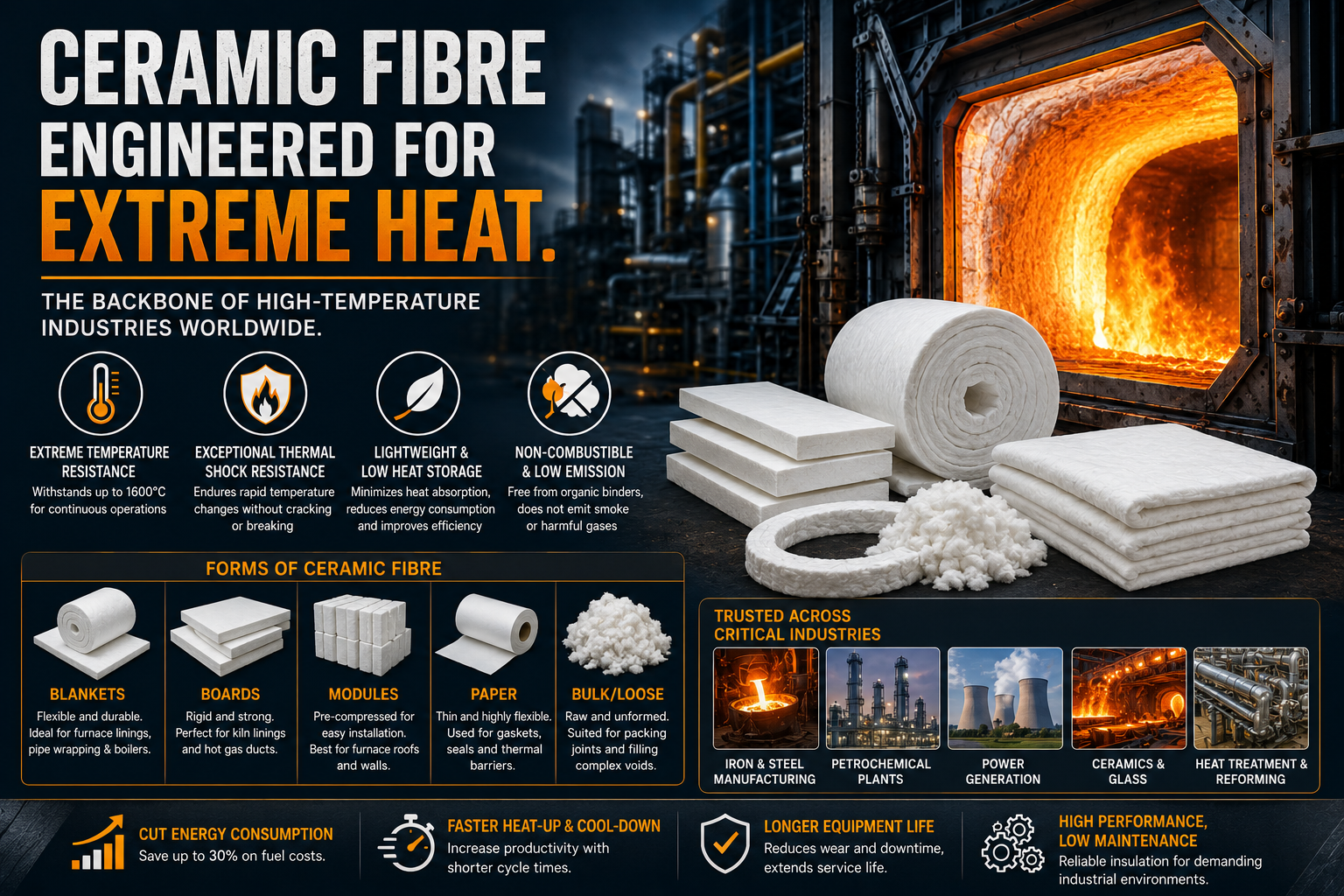
Standard ceramic fibres comfortably operate in continuous temperatures ranging from 1,260°C to 1,430°C (2,300°F to 2,600°F), with specialized high-alumina variants capable of withstanding up to 1,600°C. It will not melt, degrade, or lose its insulating properties under these severe conditions.
Exceptional Thermal Shock Resistance
Traditional dense refractory bricks are prone to cracking or shattering if they are heated or cooled too rapidly. Ceramic fibre is highly flexible and porous. It can endure rapid, intense temperature fluctuations—going from freezing to red-hot and back again—without sustaining structural damage.
Low Thermal Conductivity and Heat Storage
Because ceramic fibre is lightweight and composed largely of trapped air, it absorbs very little heat itself. This “low heat storage” means industrial furnaces lined with ceramic fibre heat up and cool down much faster than those lined with heavy bricks, resulting in massive fuel and energy savings.
Common Forms of Ceramic Fibre
To meet diverse industrial requirements, ceramic fibre is manufactured in several versatile formats:
| Format | Description | Best Used For |
| Blankets | Flexible, interwoven mats of fibre with high tensile strength. | Furnace linings, pipe wrapping, and boiler insulation. |
| Boards | Rigid, vacuum-formed panels that resist high-velocity gas flow. | Backup insulation in kilns and hot gas duct linings. |
| Modules | Pre-compressed blocks of folded blanket designed for easy installation. | Heavy-duty steel and petrochemical furnace roofs/walls. |
| Paper | Thin, highly flexible sheets manufactured like traditional paper. | High-temperature gaskets, thermal barriers, and seals. |
| Bulk/Loose | Raw, unformed fibre straight from the spinning process. | Packing expansion joints and filling complex, awkward voids. |
Industrial Applications
Because it drastically reduces energy consumption while protecting outer steel shells from melting, ceramic fibre is heavily utilized in:
- Iron & Steel Manufacturing: Lining heat treatment furnaces, ladle covers, and forging operations.
- Ceramics & Glass: Insulating continuous kilns and glass-melting furnaces.
- Power Generation: Insulating high-pressure steam turbines and boiler doors.
- Petrochemical Plants: Lining reformers, cracking furnaces, and high-temperature pipelines.
The Hi-Tec Rock Fibre Standard
At Hi-Tec Rock Fibre, we understand that every industrial environment has unique thermal demands. Whether you need the robust, cost-effective fire protection of our EnSave stonewool products, or the extreme high-temperature resilience of ceramic fibre, applying the right material is vital for operational efficiency.
Upgrading from traditional heavy refractories to modern ceramic fibre solutions can cut furnace fuel consumption by up to 30%, increase production capacity through faster cycling times, and drastically reduce maintenance downtime.
Looking to optimize your high-temperature industrial processes? Contact the experts at Hi-Tec Rock Fibre to discuss the best thermal insulation strategy for your facility.
No Comments