


03 Feb Stone Wool Insulation Explained: Benefits, Applications, and Why It’s Ideal for Indian Industries
Introduction
Stone wool insulation has become a preferred insulation solution for modern industries and buildings due to its proven performance in thermal efficiency, fire safety, and acoustic control. In India, where industrial environments often face high temperatures, strict safety regulations, and rising energy costs, choosing the right insulation material is critical.
This blog explains what stone wool insulation is, how it works, its key benefits, and why it is widely used across Indian industrial and building applications—all in a clear, practical, and organic way.
What Is Stone Wool Insulation?
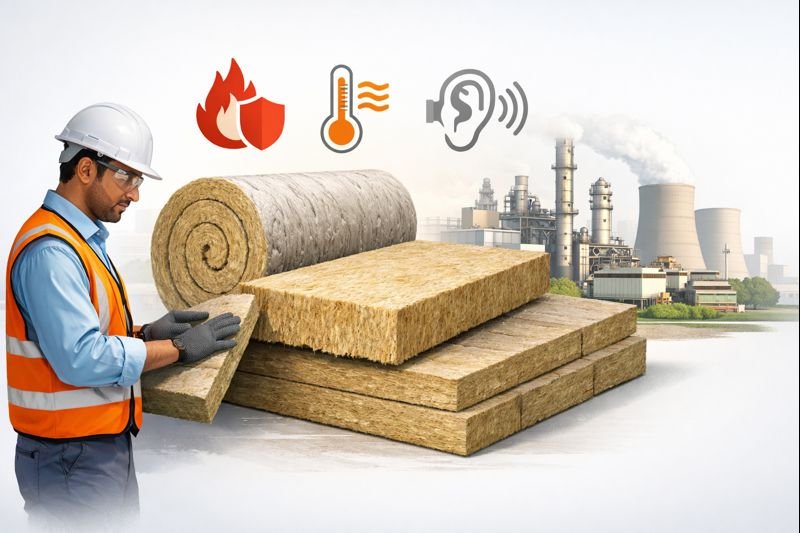
Stone wool insulation, also known as rock wool insulation, is a high-performance insulation material manufactured from natural rocks and minerals. These raw materials are melted at very high temperatures and spun into fine fibres, which are then bonded to form insulation products such as slabs, rolls, pipe sections, and mattresses.
The fibrous structure traps air within the material, creating an effective barrier against heat transfer, noise, and fire. Because it is derived from natural stone, stone wool insulation remains stable and reliable even in demanding industrial conditions.
How Stone Wool Insulation Is Manufactured
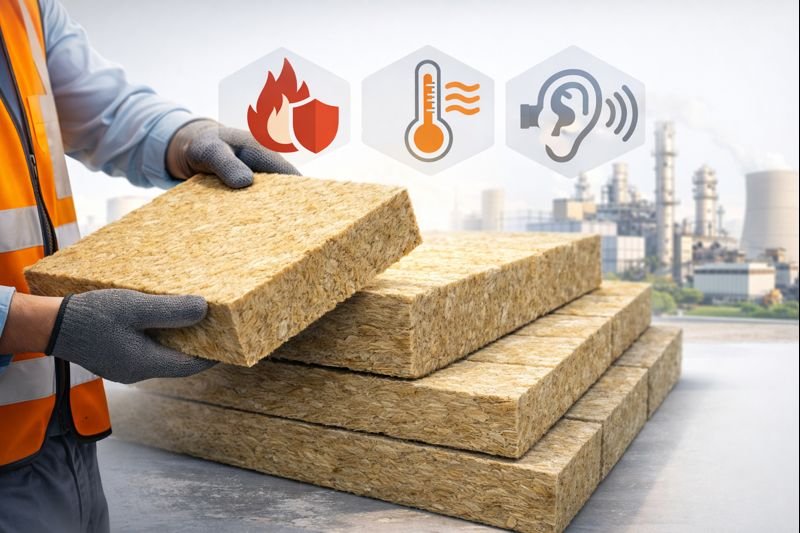
The manufacturing process of stone wool insulation is designed to deliver consistency, durability, and long-term performance:
- Natural rocks and minerals are melted at temperatures exceeding 1,400°C.
- The molten material is spun into fine fibres using advanced spinning technology.
- These fibres are bonded with high-quality binders to achieve the required density and strength.
- The material is formed into rolls, slabs, pipe sections, or loose wool based on application needs.
This process results in insulation that is non-combustible, dimensionally stable, and suitable for both industrial and building applications.
Key Benefits of Stone Wool Insulation
1. Thermal Efficiency and Energy Savings
Stone wool insulation significantly reduces heat loss and heat gain, helping industries and buildings maintain stable temperatures. This leads to:
- Lower energy consumption
- Improved process efficiency
- Reduced operational and cooling costs
It is widely used as thermal insulation for industrial equipment, piping systems, and HVAC installations.
2. Fire Resistance and Safety
One of the most important advantages of stone wool insulation is its excellent fire resistance. Being non-combustible, it can withstand extremely high temperatures without melting or producing toxic smoke.
This makes it ideal for:
- Industrial plants and refineries
- Power generation facilities
- High-rise commercial buildings
- Fire-rated walls and partitions
3. Acoustic Insulation Performance
The dense, fibrous structure of stone wool insulation absorbs sound waves effectively, reducing noise transmission and reverberation. It is commonly used for:
- Industrial noise control
- Machinery enclosures
- Commercial buildings and offices
- Auditoriums and technical rooms
4. Durability and Long-Term Performance
Stone wool insulation does not sag, shrink, or deteriorate over time. It maintains its shape and performance even under conditions involving heat, vibration, and continuous operation, making it suitable for long-term industrial use.
5. Moisture Resistance
With proper installation and suitable facings, stone wool insulation resists moisture absorption. This helps reduce the risk of corrosion under insulation (CUI) and ensures consistent thermal performance in humid or variable environments.
Applications of Stone Wool Insulation in India
Due to its versatility, stone wool insulation is widely used across multiple sectors in India:
Industrial Applications
- Boilers, furnaces, and kilns
- Refineries and petrochemical plants
- Power plants
- Cement and steel industries
- Process pipelines and vessels
Building and Construction Applications
- Commercial and residential buildings
- HVAC duct insulation
- Roofing and ceiling insulation
- Fire-rated walls and partitions
Infrastructure Projects
- Airports and metro stations
- Hospitals and data centres
- Educational and institutional buildings
These applications benefit from stone wool insulation’s ability to meet Indian and international performance standards.
Why Stone Wool Insulation Is Ideal for Indian Industries
Indian industries operate in challenging conditions that demand reliable insulation solutions. Stone wool insulation addresses these challenges by offering:
- Stable performance in high ambient temperatures
- Compliance with fire and safety regulations
- Improved energy efficiency
- Long service life with minimal maintenance
By choosing stone wool insulation, industries can enhance safety, reduce energy losses, and improve overall operational efficiency.
Conclusion
Stone wool insulation is a proven solution for thermal insulation, fire protection, and acoustic control across industrial and building applications. Its durability, safety, and energy-saving properties make it an ideal choice for Indian conditions.
Selecting high-quality stone wool insulation products ensures long-term performance, compliance with safety standards, and dependable results for demanding projects.
No Comments